Kitchen Remodeling Trends

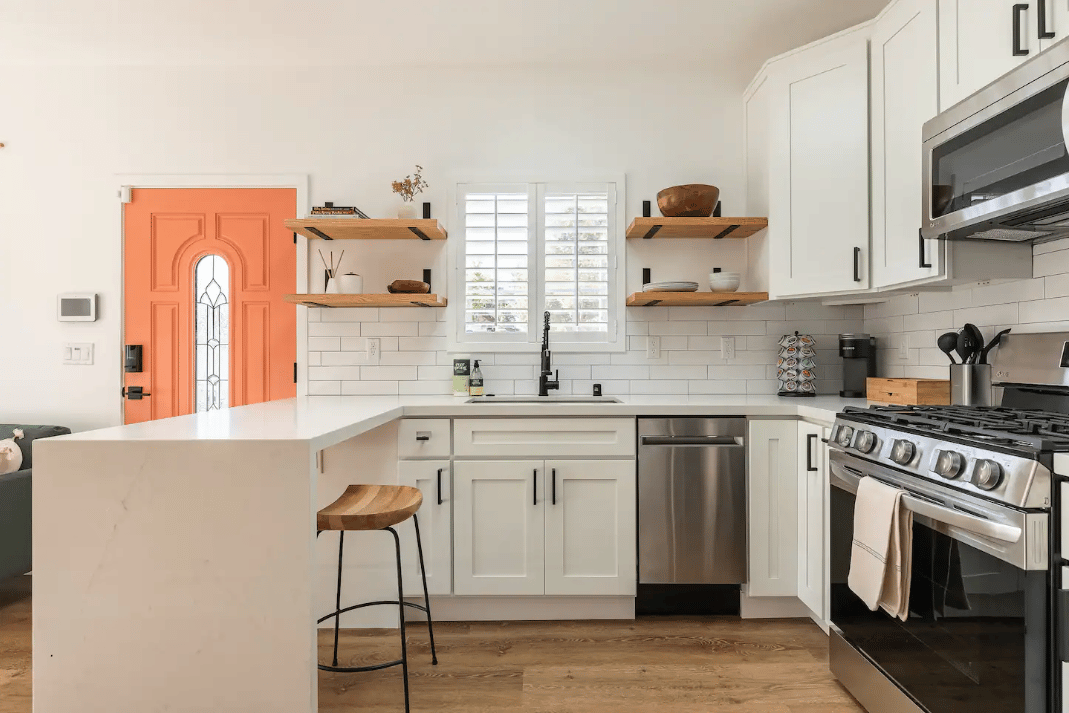
At a time when the environment and climate change, are issues in our daily lives, environmentally friendly kitchen remodeling trends can be very helpful, when considering a renovation. The kitchen is the heart of the family home, and needs to be both functional and family friendly. By following these trends, remodeling a kitchen can be achieved without harm to the environment.

There are several basic environmental issues which need to be addressed when remodeling a kitchen. Resource conservation, the management of the world’s resources, for the benefit of both this generation and for future generations, is a high priority. The supply of energy to the public, is not environmentally sustainable, as consumers, the efficiency of lighting and appliances is an important choice. When renovating a kitchen, the environmental war cry, ‘reduce, reuse and recycle’ should ring out. In the redesign, a way to incorporate these issues, should be ensured.

Supplying materials for a renovation, provides lots of opportunities to be environmental. By sourcing reused or recycled materials, from specialist suppliers, can provide a house with character, and the project with a lower bill. When new materials are to be used, sourcing from reputable and environmentally sustainable sources is desirable. Dramatic results can be obtained when using old furniture, in unusual places. Another resource which needs to be conserved is drinking water. Modern technology is providing ways of managing water supply and use within the house, to conserve water and help environmental reserves to remain.

The prime use of a kitchen is to prepare food, therefore any appliances need to be functional. However, the energy usage of a kitchen also needs to be considered. The mains energy use of a kitchen can be reduced greatly, when a micro-generation plant is in use. Micro-generation, using solar and wind generators, can reduce a households power costs greatly. By using electrical appliances, within the kitchen, the appliances may be able to run for free.

The choice of appliances available is staggering. However, additional factors need to be considered before purchase. If the appliances are oil or gas powered, the cost of running those appliances is likely to rise, as the reserves of gas and oil are now diminishing. When choosing appliances, the energy efficiency rating should be examined, to ensure a reduction in green house gases is achieved.

Most households recycle and compost regularly, but it can be time consuming. By incorporating, recycling and composting repositories, directly into the kitchen design, the waste stream can be managed more efficiently. By being able to separate waste at the point of consumption, instead of having to sort it as an after-thought, the processes of recycling and composting will go more smoothly.

Environmentally friendly kitchen remodeling trends really can help the environment. They can also help the renovators, to have a more functional kitchen, and to save money, both in the short-term and also in the long-term. A positive difference can be made to the environment, and benefits will also be enjoyed by the family, by employing some of these remodeling trends.

New Technologies for Greener Homes

BY HARRY SAWYERS of Popular Mechanics

The Tightwad Toilet

(Photograph by Nick Ferrari)

Toilet technology is a little like limbo—how low can you flow? The bar now sits at 1.28 gallons per flush. But Niagara’s Stealth toilet sips only 0.8 gallons per flush thanks to a dual trap system that uses an air-transfer valve to pressurize the trapway, requiring less water to get something that early, primitive low-flow toilets lacked: “nice, complete rim cleaning,” says Niagara’s Paul Kwiat. Pressurized air replaces water in the trap as the tank fills. As the fixture flushes, the air travels up into the tank to displace the water in a tiny torrent to the bowl.

Get in on the Graywater

(Photograph by Karl Juengel/Studio D)

Most graywater draining from a sink or shower can be reused, with a little scrubbing, as garden irrigation. Few systems accomplish this task as simply as the one from US HydroTech, which pumps graywater through layers of filtration media to clear the water of soap and debris without chemical treatments. Developer Ed Bertain claims the system can handle up to 69.3 gallons per person, per day. Combine it with a collection tank, which can also be set up to catch rainwater.

The Reel Deal

(Photograph by Karl Juengel/Studio D)

Dual gears store energy the way a flywheel does in the blades of Fiskars’ new Momentum mower, which devours debris that would jam a typical reel. The blades also stay sharper—revolving and stationary blades often collide on each turn, but these work like scissors, passing each other at 0.003 inches. Clever blade-spool design lets the mower flush-cut edges typically trampled beneath the wheels.

Sycamore Syringe

(Photograph by Karl Juengel/Studio D)

The Deep Drip 1-inch-diameter stake delivers water and fertilizer where they’re needed: to tree roots, via a perforated hollow spike hammered
2 feet into the soil surface. A study
by Cal State–Fresno’s Center
for Irrigation Technology found the stake to be more effective than surface
water at saturating the
root zone while reducing runoff and soil erosion.

Greener Cleaner

(Photograph by Karl Juengel/Studio D)

Made using nontoxic ingredients
in a secret Manhattan lab, Green Depot’s home-brewed cleaners reduce ecological impact as well as elbow grease. The recipe for the window cleaner eschews ammonia and alcohol in favor of “completely biodegradable surfactants,” and the tub and tile cleaner works its fume-free magic through the power of a low-pH organic salt.

Petrified OSB

“Oriented-strand board is just such a gorgeous product,” TorZo’s Chris Coduto says, “but if you want to rout an edge in it for a countertop, it tends to splinter.” TorZo’s solution is to place the structural panels in a heated vacuum, “polymerizing” the material so that it’s firmer than a tropical hardwood. The result, named Orient, comes in four hues and can be shaped into OSB countertops, cabinet fronts, wainscoting or flooring. Installers fasten it with a two-part Corian adhesive (or just wood glue), then seal it with a clear coat. This process takes a basic building product
and redefines its purpose.

Super Caulk

(Photograph by Nick Ferrari)

This spray-foam latex seals gaps too big for caulk to fill. Installers use a gun rigged to a mixing machine to blast Energy Complete into framing transitions, such as where plates and joists meet. And while caulk loses its hold under pressure changes, latex permits a bit of building movement—enabling it to withstand the big bad wolf of blower-door tests. Plus, it installs faster than “a guy with just a little tube,” Owens Corning’s Karel Czanderna says.

LED Upgrade

(Photograph by Karl Juengel/Studio D)

Power-tool flashlights, not always the crown jewel of the combo kit, can get an efficiency boost with Milwaukee’s Upgrade to LED. Switching the bulbs triples the run time on most 9.6-volt to 28-volt tools, and the 50,000-hour LED has 250 times the incandescent’s life span.

Wonder Window

(Photograph by Karl Juengel/Studio D)

Solera’s opaque exterior panels contain nanogel polymers, weightless beads filled with air, that form a lattice through which no heat flows. As a skyscraper’s curtain wall or
a privacy wall in a house, the panes’ R-17 to R-20 insulation—on par with a wall’s—“dramatically reduces the heating and cooling load of
a glass building,” Solera’s Avi
Bar says.

Cool, Dark Roof

(Photograph by Marko Metzinger/Studio D)

New Solaris shingles from CertainTeed match the 40 percent reflection rate of a light-colored roof, but look like a dark one. The difference is in the titanium dioxide. The reflec­tive coating encases each granule; spot-coating, the norm, leaves a white sheen. “We’ve been selling roofs on curb appeal for 20 years, and people heard us—nobody wants white,” the company’s Lucas Hamilton says.

Salvage Scavengers

(Photograph by Karl Juengel/Studio D)

The main challenge of using second-hand building materials? Navigating the salvage yards to find what you need. Kansas City’s PlanetReuse acts as your scrap agent, sourcing anything from ex-ocean-boardwalk lumber to brick from an abandoned factory. The matchmakers pair materials requests with new online listings in an operation so streamlined that the firm can often price salvaged items for less than an equivalent new material. Good thing—they don’t mill it like they used to.

Twists on Solar

Clever ways to catch the sun emerge at the solar decathlon, a biannual contest in which college students design and build a solar-powered home. three details from the 2009 homes get extra credit for creativity.

Solar Louvers

University of Louisiana at Lafayette

The Ragin’ Cajuns’ BeauSoleil home has a transitional breezeway, or dogtrot, capped by a complex skylight. Polycarbonate panels sandwich the skylight, which houses flat-plate solar thermal collectors and aluminum fins that function like stationary louvers on exterior shutters. Fins shade the porch from the sun as solar thermal collectors threaded through the metal provide domestic hot water.

Reflective Green Roofing

Penn State University

On top of Penn State’s Natural Fusion home, cylindrical photovoltaics combine with a green roof. The tube-shaped “panels,” made by Solyndra, take advantage of reflective roofing by collecting solar energy from 360 degrees. Green roofs reduce a building’s rainwater runoff and lighten its cooling loads, but the Nittany Lions realized that plants could also bounce sunlight back into the panels—fusing technology and nature to create a new building-design technique.

Smart Shade

University of Minnesota

The photovoltaic-clad roof gable on the Golden Gophers’ Icon house extends to shelter its eastern porch beneath a translucent solar array. Silicon film on both sides of the bifacial panels captures sunlight from above and reflected light from below. An example of the design category known as building-integrated photovoltaics (BIPVs), this capitalizes on the pleasant, efficient shading effects of a porch awning by putting it to work generating power.

Source: http://www.popularmechanics.com/home/improvement/energy-efficient/4350127

Tips on picking paint colors

Why do we find one place appealing and are uneasy in another? Why are we attracted to one product over another? Color—whether architectural or in products—accounts for 60% of our response to an object or a place.

The “buzz” about color is usually called “color psychology.” But the effects of color are subtle and significant; physical and psychological. Color use is not something that results in a definitive equation between “color and our moods,” as is a currently popular expression. Wherever we go we respond to color, but the importance of color is often underestimated. Color use is important to us personally in our homes and in the places where we work.

  1. Start Small
    If you’re not sure where to begin with color, experiment in a powder room or bathroom, a small hall or area between rooms, or an accent wall. If you’re doing your own painting, pick an area that’s quick to do so you can see your results sooner, and be happy with it or change it. Look at the process as an adventure.To get started, select a favorite color drawn from artwork, a rug, dishes and an accessory or furniture piece as a main color or accent.
  2. Think About Your Mood
    When selecting a color, consider the mood of a room. In a bedroom do you want the feeling to be restful and soothing or dramatic and intimate? Soft, cool colors and neutrals usually create a quieter feeling while stronger colors are for drama.Do you want a dining area to feel sociable and stimulating or appear formal and quiet? Warmer, contrasting and somewhat brighter colors add to a sociable atmosphere; deeper blue-greens and neutrals will give a more formal ambiance.

    Do you want kid’s rooms to create an active and exciting energy or an orderly and restful feeling? Be careful not to overstimulate your children with intensely bright hues. You may not know it, but some brighter colors can lead to unrest and irritability.

  3. Pay Attention to Lighting
    The reason why paint stores have light boxes for you to test paint chips:

    • Natural daylight shows the truest color;
    • Incandescent lighting brings out warm tones and yellows;
    • Fluorescent lighting casts a sharp blue tone.

    So, a strong color might be too bright and overpowering when used on all walls or next to a large window, but it might be effective when used as an accent wall with indirect light.

Read more tips on HGTV: http://www.hgtv.com/decorating/10-tips-for-picking-paint-colors/index.html

How to Go Green

Great article from NKBA:

This is a topic that is near and dear to my heart. Working as a designer has turned me into a rampant environmentalist. Our industry is greatly affected by multiple issues that fit within “green design.” Energy use, water conservation, offgassing, recycling, and passive and active solar design principles are just a few of the concerns that designers take into consideration on a daily basis.

Some states like California, Nevada, and New Mexico have codes in place that force designers, architects, and contractors to include green features in their projects. In Southern California, we have severe drought cycles, a unique eco-system, and a huge population that forces us to take water, energy, and environmental issues seriously. We are affected by title 24 legislation that requires our projects to have fluorescent lighting as the first switch available when you go into a kitchen, and legislation that mandates the use of low-flow toilets and showerheads.

The real estate market seems a little schizophrenic with its appetite for bigger and bigger houses with bigger kitchens filled with ever more appliances, and multiple bathrooms equipped with whirlpool tubs, spa shower sets, multiple toilets and loads of appliances that all use more and more of our precious resources. They pay lip service with low-flow toilets and low-flow showerheads? Recently, I was meeting a contractor at a new jobsite to bid out a job and he was late. The reason he gave for being late was that when he drove up in front of the house, he thought it was an apartment building. It was so big, he left and came back. The house was a tract home being constructed by one of the major builders and had over 6,000 square feet of living space.

As designers, we are caught in between a client’s wish list and the environmental impact of it all (and at the same time, we want to make it beautiful). The good news is that the building industry and its associated industries such as appliances, cabinets, and hardware, have made huge strides in making their products more “green” through programs such as certified wood, recycled glass countertops and tiles, recycled wood flooring, and low VOC paints. As appliance companies make energy efficiency a top priority, all that’s left is to make sure we help educate the consumer and encourage them to make sustainability more of a priority. There’s a lot that can be done by continually making green design principles a priority and by offering the client more attractive possibilities.

Here are a few things that I do to address green design issues:

  • Work with companies that embrace a green design philosophy.
  • Get rid of trash compactors and replace them with recycle bins. The compactors compress garbage so that oxygen can’t get to the trash to help it biodegrade.
  • Recycle materials, such as cabinets, coming out of projects through organizations like Habitat for Humanity.
  • Specify energy-efficient windows and doors.
  • Use LED lighting whenever possible.
  • Specify washing machines and dishwashers that use less water.
  • Encourage clients to invest in new refrigerators with energy-saving features.
  • Specify recycled or sustainable materials whenever possible.
  • Specify low VOC paints.
  • Specify ceiling fans to lessen the need for air conditioning.
  • Use passive solar principles as often as possible.
  • Keep up to date with resources that embrace green design.
  • Use whirlpool tubs that do not require in-line heaters.
  • Specify certified wood sources.
  • Educate myself and my clients on the latest green design techniques and materials.

Link: http://www.nkba.org/green/articles_how-to-go-green.aspx

Home Remodeling and Decorating Show

The 34rd Annual Home Remodeling & Decorating Show is slated to take place April 30-May 2, 2010 at the Pasadena Convention Center.

Organizers call the show Southern California’s longest running and home and garden show. The show will feature the latest home improvement products and services for every part of your home. The show will also feature lots of special guests and fun seminars.

For more information, visit The Home Show website.

Green Kitchen Remodeling

As the world came into the next century, people began to take a harder look at the way we all treat the environment; and a new an unexpected trend began to emerge: Going Green. This has been reflected in every part of our lives, from Green cleaning products to a renewed interest in reusable diapers, to the new popularity of hybrid cars and bringing reusable bags to the grocery store, and even in the world of home remodeling.

When it comes to kitchens, remodeling in an eco-friendly way can be particularly rewarding. Eco-friendly appliances save money in the long run by using much less energy and water. Just look for the ‘Energy Star’ label on an appliance and take a look at the watts of power used per year on the model. Compare that to an old refrigerator or oven – pretty surprising, isn’t it? A woman I know replaced her old refrigerator a few years ago with an Energy Star one, and saw an instant savings on her electric bill of $40. Each month.

Kitchen flooring has also undergone a Green revolution. The resource of bamboo is highly renewable, but it is also extremely durable and low maintenance. This, coupled with its resistance to water damage from spills and its beauty, have made it an ideal source for flooring not just in the kitchen but throughout homes.

Almost everyone uses florescent lights in the home – there are now Energy Star versions of those as well! A very inexpensive way to reduce one’s carbon footprint is to replace old fluorescents lights with new, Energy Star ones. Let’s say an electric company charged 12 cents per Kilowatt-hour. The use of just ONE energy-efficient 60-watt light for 8 hours a day, create an annual savings of $16.47. Just for ONE light bulb! Multiply that amount by the number of lights in a typical kitchen and home and the cost savings is monumental.

How about water conservation? Now a lot of model come with a ‘drip free’  function and are motion-activated, so germy hands never touch the faucet. With the elimination of drips and the fact that the water won’t run when hands are not under the spigot, the water conservation can really add up.

The Green Revolution is all around us, and the world of kitchen remodeling is no exception. By implementing Green trends, homeowners can enjoy environmentally friendly kitchens that are also stylish and functional, improving our lives and the world we live in at the same time.

Current Bathroom Remodeling Trends

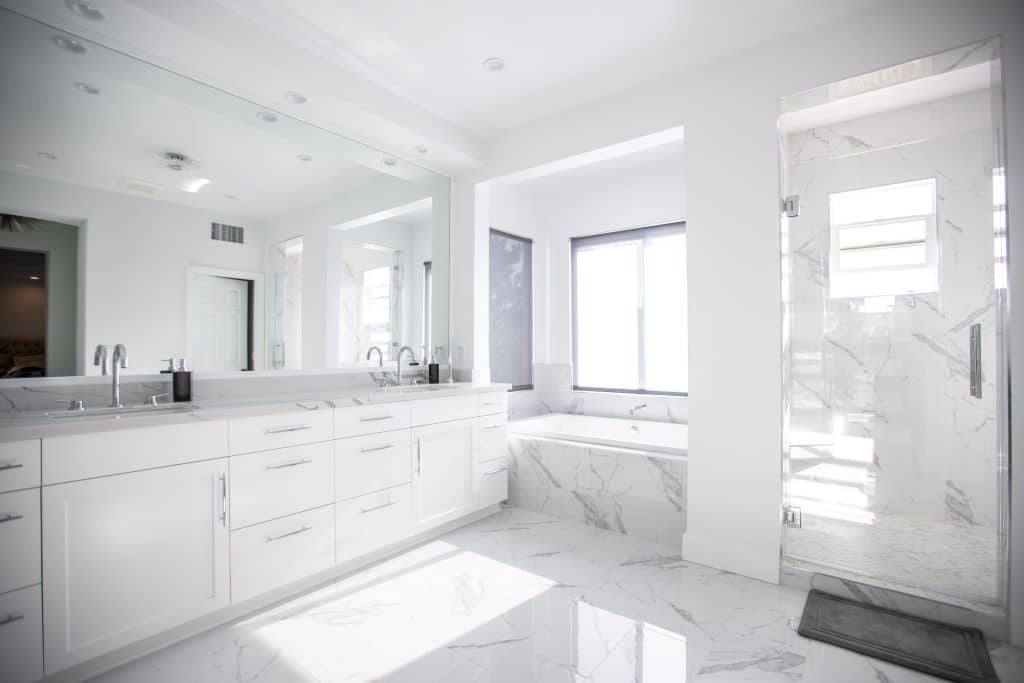
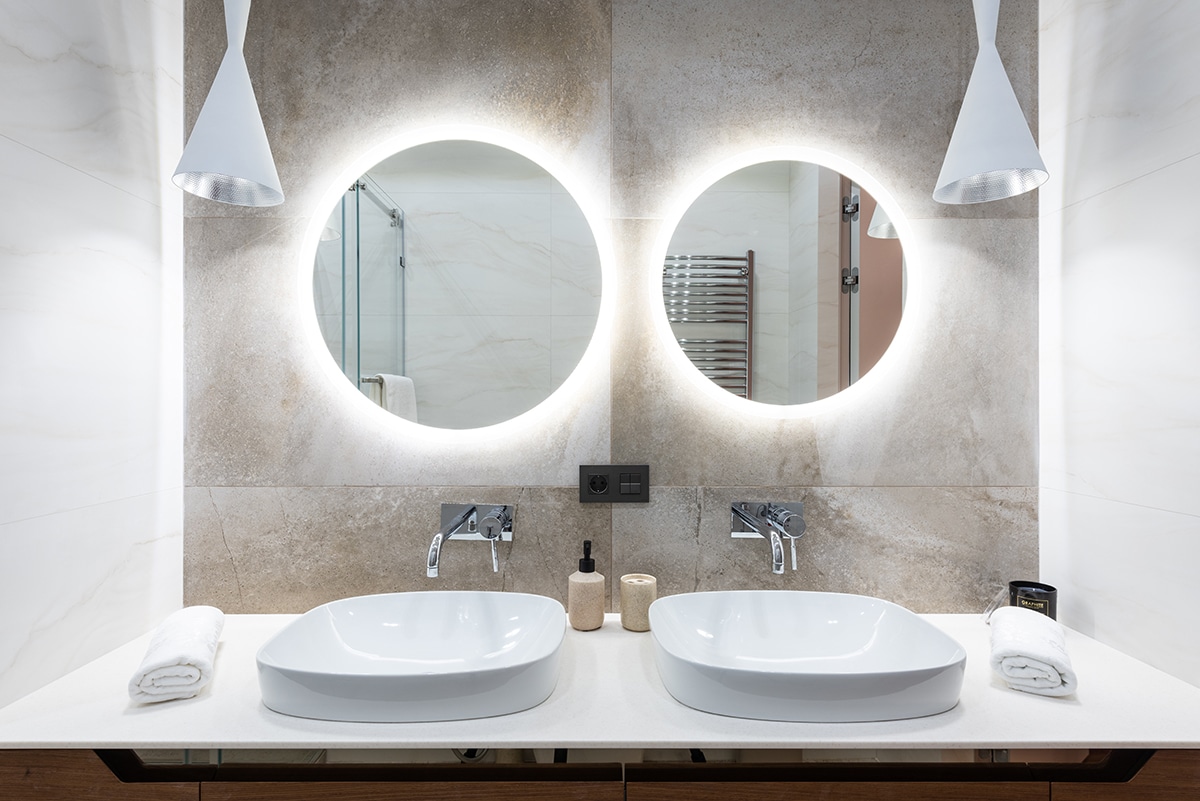
In the past few years, the bathroom has evolved from a simple necessity place at home to a place where people are spending more and more time relaxing and rejuvenating. Today’s homeowner is looking to make the bathroom more comfortable, stylish and personal by using fixtures with more than one function.

There are a few new trends that are appearing in new bathroom remodels:

Fixtures: gold and chrome are becoming popular choices to dress up the room. While clear plastic and resin handles may have been popular a few short years ago, the material’s short life has made most homeowners switch to better quality and better looking items in their bathroom.

Floor: new flooring trends are somewhat more radical than others. Homeowners are now installing an electric heating system under the tiles and even up through the wall to provide constant warmth all around the body. Also, tile and vinyl flooring have been replaced with concrete flooring styles. Concrete flooring can be easily colored and even scored in a way that can remain timeless

Heating: Fireplaces are being added into bathroom design more and more as a means of warmth and to add a sense of coziness and tranquility to the room. Sculptural radiators are also becoming more popular for heating a large area, and double as a decorative piece of art.

Different materials: using a combination of building materials is another hot design trend. Materials like glass, chrome and china can be found in new and remodeling bathrooms across the country. Glass tile is emerging as a favorite material for the bath. Homeowners are designing showers with glass tile in ocean colors to create a warm and relaxing atmosphere. Stainless steel also is making its way into the bath. Designers are incorporating stainless steel in everything, from the sink to the medicine chest to the bathtub to shower walls. A natural stone element in the room can add warmth and a contrasting texture to the stainless steel.

Separate shower and bath: separating these two elements provides more flexibility in choosing a tub. Homeowners that prefer Jacuzzis and large, sunken tubs over traditional bathtubs would do well to have a separate shower/tub design.

Sinks: sinks are also becoming a part of the latest trends. Using bright colors are now popular because they liven up the bathroom. Also, they are made of acrylic or fiberglass to update the look of bathrooms inexpensively and without the need to do a complete bathroom remodeling.

Bathrooms are trending more and more toward a full day-spa design. By looking at the latest trend makes the bathroom remodeling a major selling point when a home is sold with a very high rate of investment. For more information on design ideas, call a professional. Preferred Home Builders and our team of professional and experienced designers and skilled tradesmen will help you build your dream bathroom. Contact us today to schedule a free consultation and 3D design, www.friendlycontractor.com, or call (888) 937 – 8321.

Buy Generic Baclofen – Buy Online No Prescription Needed. Cheap price. Overnight Delivery. Discounts up to 80%. Free shipping available. buy baclofen Pharm4All offers Baclofen of the highest quality at extremely competitive prices. Please browse our online shop for Viagra, Cialis, Levitra and other generic
Order Effexor medication online. Buy Effexor/Venlafaxine at reputable online pharmacy and save big money. The bargain price – as low as $0.92 per pill! effexor generic Effexor is an antidepressant drug made by the pharmaceutical company Pfizer. Although it has been proven to be effective in treating depression and anxiety
Baclofen is a potent and stereoselective γ-aminobutyric acid (GABAB) receptor agonist used clinically to control spasticity (Davidoff, 1985). Recent preclinical buy baclofen online Baclofen belongs to a group of medicines called muscle relaxants. These medicines work by acting on the central nervous system and may be used for the relief